
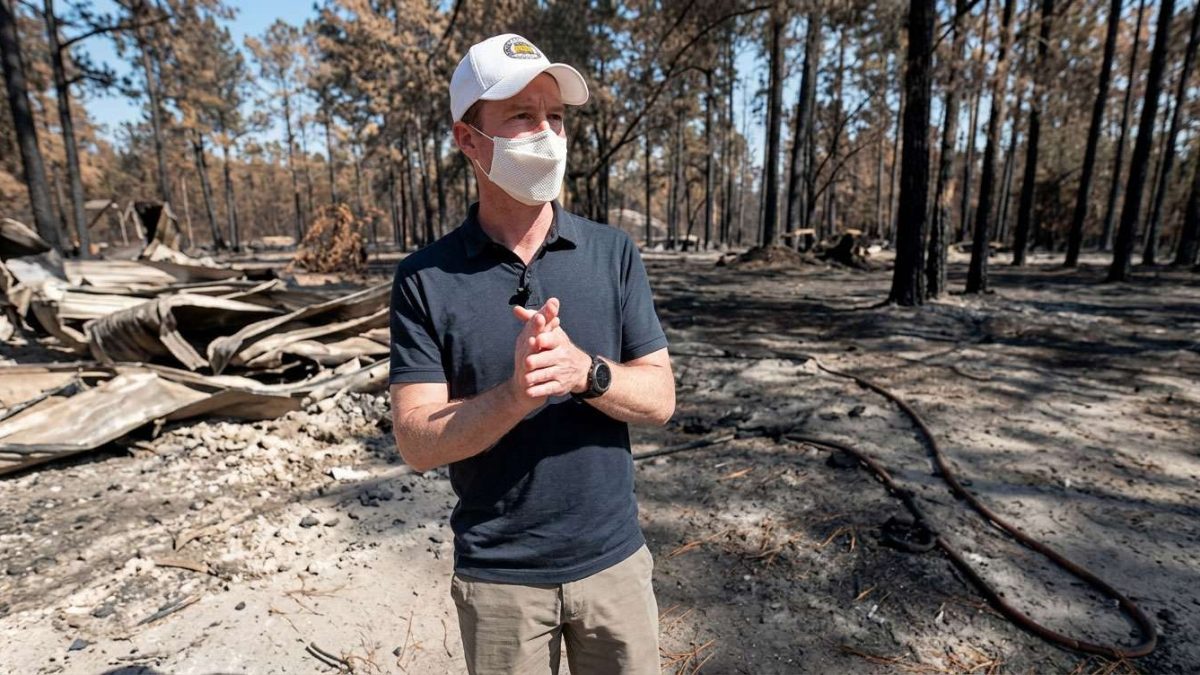
CNN wildfire report in Georgia cut short after homeowner confronts reporter on private property
A live CNN wildfire report in Brantley County, Georgia, was cut short after a homeowner angrily ordered the crew off her private property, citing concern for her dogs as drought-fueled fires engulfed the nearby area.
- Live interruption: A homeowner interrupted a CNN live shot and ordered the crew off her property; she shouted that her dogs were outside and she did not want anyone near her house — coverage and video were posted by Mediaite.
- De-escalation: CNN meteorologist Derek Van Dam complied and the crew left the scene; the live shot was cut back to the studio as anchors expressed concern (Mediaite).
- Fire context: Drought-fueled fires in southeastern Georgia had already scorched more than 34,000 acres and destroyed about 87 homes, prompting evacuations and curfews as reported by Mediaite and shared widely including by Fox News.
The confrontation on camera
During the live segment, Derek Van Dam was describing wildfire damage when a woman off camera began shouting: “I don’t want nobody near my house! My dogs are out there. Get away, get away!” Video and reports published by Mediaite captured the exchange.
Van Dam moved quickly to de-escalate. On camera he responded, “You got it, you got it. We are — okay… Yeah, we’re going to leave it here. Okay? You got it.” The crew then exited the driveway or yard and the live shot was cut back to the studio, where co-anchor Pamela Brown said, Let’s hope Derek gets to safety there.
Reporting amid a wildfire: hazards and challenges
Van Dam described rapidly changing conditions at the scene: sudden wind shifts altered air quality and produced a strong chemical burning smell that led the crew to put on masks. Those on-the-ground observations underscore how quickly a live report can become unsafe or unusable for broadcast (Mediaite).
Regional conditions — drought, high winds and abundant dry fuel — have driven fire growth and smoke production. Reports placed the burned area at more than 34,000 acres with roughly 87 homes destroyed, prompting mandatory evacuations and curfews to protect residents and allow emergency operations to proceed.
Why homeowners sometimes confront reporters
The incident highlights tension common in disaster zones: the clash between media coverage and private-property concerns. Homeowners who remain to protect pets or property may be fearful, angry or exhausted, and may view media crews as intrusive or a potential complication when managing a crisis. In this episode the homeowner explicitly cited concern for her dogs as the reason she demanded the crew leave (Mediaite).
News crews generally seek permission before entering private land, but chaotic emergency conditions can blur boundaries. Ethical and legal limits apply, and on-the-spot judgment — like Van Dam’s decision to step back — can reduce risk and defuse conflict.
Source notes and verification
- Video and on-scene quotes: Mediaite provided the clip, direct quotations and context about the interruption and wildfire conditions.
- Wider coverage: The interruption was also summarized by Fox News, which noted the homeowner’s demand that the crew vacate the property.
- Additional footage: On-the-ground video and developing reports of the fires were also posted by Modern Ghana.
Implications for Hesperia, California
Although the confrontation occurred in Brantley County, the episode carries practical lessons for communities like Hesperia in San Bernardino County. The event underlines the broad impacts of major wildfires — economic, political, social and cultural — and offers actionable takeaways for local residents.
Economic impact: Large wildfire losses can raise insurance costs, strain relief funds and disrupt small businesses. Hesperia homeowners and insurers should monitor risk and prepare contingency plans.
Political consequences: For conservative audiences, the confrontation accentuates concerns about property rights and public-safety policy. Local leaders may face pressure to refine evacuation rules, improve defensible-space programs and support volunteer fire districts.
Social effects & cultural relevance: The stress behind the homeowner’s reaction — protecting pets and property — will resonate locally. Community groups can help by coordinating animal rescue plans, sharing evacuation checklists and hosting burn-safe workshops.
Practical checklist for Hesperia residents:
- Review and update evacuation plans for people and pets.
- Maintain fuel breaks and defensible space around homes.
- Confirm emergency contact lists and evacuation routes.
- Monitor official local alerts and avoid approaching active fire zones or private properties.
- Prioritize safety over obtaining video or engaging with media crews during active emergencies.
Reporting in the field: safety and judgment
The Brantley County interruption demonstrates how quickly a live report can shift from informative coverage to a tense confrontation. Van Dam’s prompt compliance and the crew’s exit prioritized safety and helped avoid escalation. News organizations and local authorities should coordinate to minimize misunderstandings and to protect both residents and reporters during rapidly evolving emergencies (Mediaite; Fox News).
Key quote
“You got it, you got it. We are — okay… Yeah, we’re going to leave it here.” — Derek Van Dam, on-camera response as the crew departed the homeowner’s property.
References
- Mediaite — video excerpts, quotes and context on the interruption and wildfire conditions.
- Fox News — summary coverage of the interruption and homeowner demand.
- Modern Ghana — additional on-the-ground video and developing reports of the fires.


