
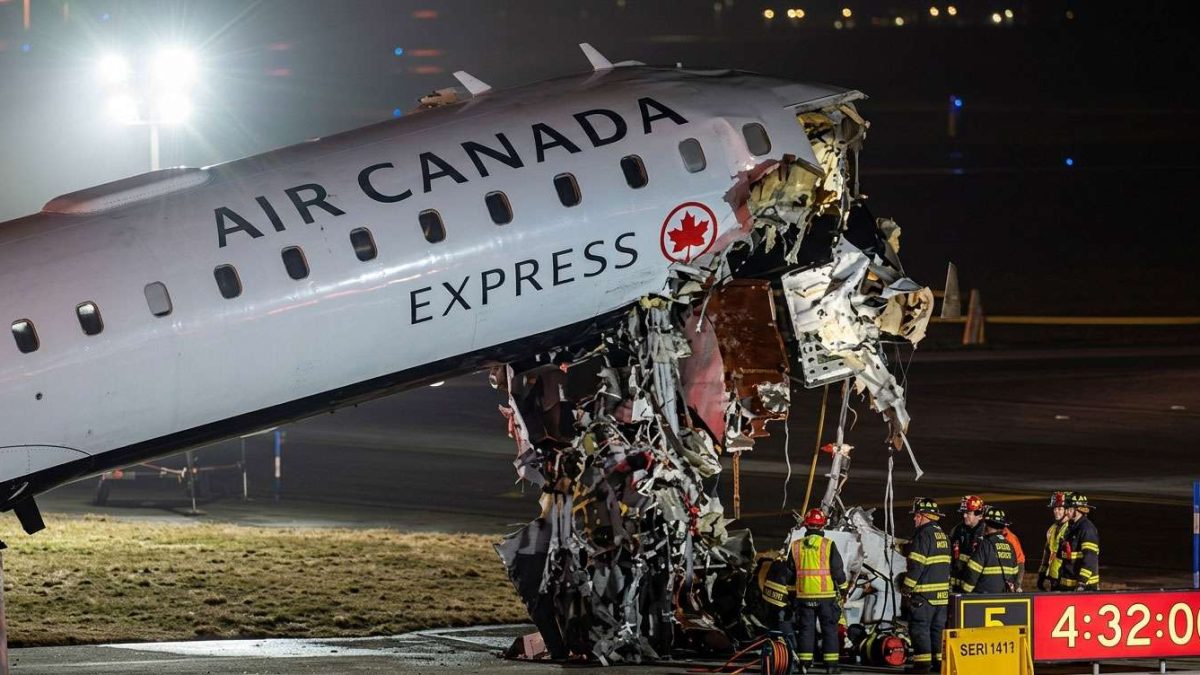
Air Canada Express CRJ-900 Collides with Port Authority Fire Truck at LaGuardia; Pilot and Co‑Pilot Killed, NTSB Begins Probe
A late-night March 22, 2026 collision at New York’s LaGuardia Airport involved an Air Canada Express CRJ-900 striking a Port Authority fire truck on Runway 04, killing the pilot and co‑pilot, injuring dozens and prompting an urgent NTSB investigation.
Key takeaways
- Fatalities and injuries: The aircraft’s captain and first officer were killed; 41 people were injured, including two ARFF officers—most have been treated and released.
- Airport disruption: LaGuardia closed under an FAA ground stop; about 537 flights were canceled, creating nationwide ripple effects.
- Investigation under way: The NTSB recovered both the CVR and FDR; analysis is ongoing with FAA, Port Authority, TSB Canada and NAV Canada participation.
- Immediate questions: ATC clearances, emergency response coordination, and human factors are primary focuses for investigators.
What happened
Flight: Air Canada Express Flight AC8646, a Bombardier CRJ-900 registered C‑GNJZ and operated by Jazz Aviation, rolled out after landing late on March 22–23, 2026. Investigators say the jet’s landing gear struck a Port Authority fire truck that had been cleared to cross Runway 04 on taxiway Delta while responding to a separate United Airlines report of an onboard odor emergency.
The aircraft struck the truck at roughly 24 mph (39 kph), then skidded about 130 meters across taxiways before coming to rest. Debris was scattered across runways and taxiways, creating a large crash scene that required methodical documentation and cleanup.
“Stop! Stop! Fire #1 Stop!” — ATC audio released by investigators captured the controller shouting with no response from the truck. A later transmission captured the controller saying, “I messed up.”
Immediate response and airport impact
Airport rescue crews and Port Authority teams executed evacuations and medical triage. All 72 passengers and four crew evacuated the jet. Two Aircraft Rescue and Firefighting (ARFF) officers were among those hospitalized. Authorities reported 41 injured — 39 passengers/crew and two ARFF officers; 32 people have been released and nine remain hospitalized with serious but non-life-threatening injuries.
LaGuardia was closed under an FAA ground stop until mid-afternoon Monday, producing about 537 flight cancellations and large disruptions for travelers nationwide. NTSB officials warned that cleanup and evidence collection would proceed slowly because debris and wreckage were spread across multiple movement areas.
NTSB investigation status and recorder recovery
The NTSB dispatched a go team and took command of the probe with support from the FAA, Port Authority of New York and New Jersey, the Transportation Safety Board of Canada and NAV Canada. Investigators recovered both the cockpit voice recorder (CVR) and the flight data recorder (FDR); the CVR was reported undamaged and transported to NTSB labs in Washington, D.C., while the FDR was sent for analysis the following day.
Responders cut an access hole in the aircraft roof to extract the recorders. Investigators are reviewing multiple data streams, including:
- Flight data: position, speed and control inputs leading to impact.
- ATC audio and surface detection replays: sequences of clearances and vehicle movement on the airport surface.
- Surveillance footage: camera views around the field to verify timings and actions.
Possible contributing factors under review
NTSB investigators said they will examine communications, procedures and human factors. Early lines of inquiry include whether the crossing clearance to the fire truck was properly issued and read back, whether the truck crew heard or complied with instructions, and how the prior emergency response affected workload and decision-making. Nighttime conditions, airport complexity and situational awareness are being evaluated.
Regulatory and procedural questions include coordination between emergency responders and ATC, clearance procedures on active runways, and whether training and alarms functioned as intended. The NTSB’s fact-finding will inform safety recommendations but does not itself assign criminal blame.
Accountability and next steps
The NTSB’s role is to identify causal factors and recommend safety improvements. Federal and Port Authority investigators will assess potential human error, system failures or procedural lapses. Air Canada, Jazz Aviation and Port Authority officials have offered condolences and pledged cooperation with the probe. Families of the deceased and injured are expected to seek answers as analysis continues.
Implications for Hesperia, California
Economic and travel impact: Disruptions at LaGuardia ripple through nationwide schedules. Hesperia travelers connecting through New York may face delays, cancellations or rebookings; local travel agencies, shuttle services and regional carriers could see temporary changes in demand. Practical advice: check airline alerts and allow extra time for connections.
Political and social effects: The runway accident raises questions about federal oversight and Port Authority governance. Local leaders and constituents may press for enhanced accountability and safety reforms at major airports. Community organizations in Hesperia may see increased requests for support from those affected by travel disruptions or loss.
Practical applications for residents
- Monitor airline communications and enroll in text/email alerts if you have travel through LaGuardia.
- Consider alternative routing (e.g., LAX or regional gateways) if timing is critical and expect longer processing times and possible rebooking hassles.
- Local emergency planners should review mutual aid, runway-crossing protocols, and radio procedures to incorporate lessons from the LaGuardia incident.
Sources and further reading
- Airlineratings: How did an Air Canada Express CRJ900 collide with a fire truck at LaGuardia?
- Business Insider: Air Canada plane collision at LaGuardia coverage
- Global News: Air Canada crash LaGuardia coverage
- The Jerusalem Post: Reporting on crash and investigation
Investigation continues
The NTSB has recovered the recorders and begun analysis, but officials cautioned that a full picture will take time as flight data, ATC recordings and surveillance footage are reviewed. Key findings are expected as raw data and early analyses are processed in the coming days.
Quick reference of facts:
- Aircraft: Air Canada Express CRJ-900, AC8646, C‑GNJZ (operated by Jazz Aviation).
- Occupants: 72 passengers, 4 crew (captain, first officer, two flight attendants).
- Casualties: Pilot and co‑pilot killed; 41 injured (39 passengers/crew, 2 ARFF officers).
- Airport impact: LaGuardia closed for many hours; ~537 flights canceled.


