
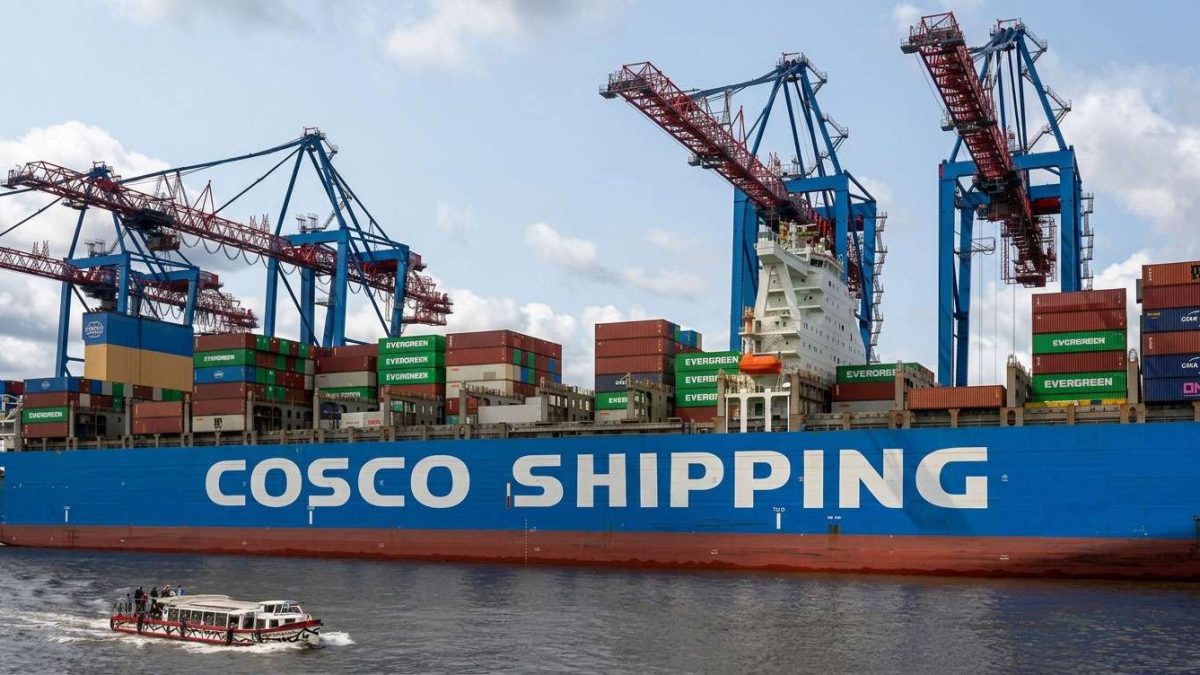
Chinese COSCO ships turned back at Strait of Hormuz, exposing gaps in Iran’s “safe passage” assurances
Two COSCO container ships — the CSCL Indian Ocean and CSCL Arctic Ocean — were forced to reverse course near Larak Island on March 27, revealing a gap between Tehran’s diplomatic pledges of safe passage and on‑the‑water enforcement amid rising regional tensions.
Key takeaways
- Iran ordered at least three ships to turn back near Larak Island on March 27, including two COSCO‑operated vessels and the Hong Kong‑owned Lotus Rising.
- Diplomatic assurances clashed with enforcement: Tehran’s pledge to allow “friendly” nations safe passage appears selective and contingent on paperwork and recent port calls.
- Global and local impacts: Shipping disruptions threaten supply chains and could raise fuel and goods prices even in inland communities like Hesperia, California.
Main content
What happened on March 27
At about 03:50 GMT on March 27, ships including the CSCL Indian Ocean and CSCL Arctic Ocean attempted to transit outward through the Strait of Hormuz but executed abrupt U‑turns after encounters with Iranian naval forces near Larak Island. Ship‑tracking services and observers flagged the reversals as unusual given Tehran’s earlier diplomatic assurances. Analysts and media noted the incidents using MarineTraffic and other tracking data, with coverage in The Strait Times.
Iran’s rules, enforcement and the “toll booth” at Hormuz
The narrow channel by Larak functions as Iran’s de facto “toll booth.” The Islamic Revolutionary Guard Corps Navy (IRGCN) controls a restricted corridor and has said it will allow passage only for vessels that meet its authorization rules. Tehran has circulated warnings that ships calling at ports of nations it deems aggressive — notably the United States, Israel and their partners — may not be allowed innocent passage. Iranian state‑linked outlets and IRGC affiliates reported that the vessels were attempting to enter a corridor reserved for vetted ships and were turned back for violating those rules, according to reporting in The Strait Times.
China’s diplomatic moves versus on‑the‑water reality
Beijing sought diplomatic assurances: Iran’s foreign minister publicly said Iran would “permit passage” for friendly nations including China, and China’s foreign minister called for talks to restore normal navigation. COSCO signaled a partial return to business by resuming bookings on Asia–Gulf routes. Yet when the two Hong Kong‑flagged COSCO ships attempted outbound transit they were turned back, exposing the difference between diplomatic statements and operational enforcement at sea (coverage in The Strait Times).
Precautions by the ships did not help
The CSCL Indian Ocean and CSCL Arctic Ocean broadcast messages on Automatic Identification Systems (AIS) noting Chinese ownership and crews to signal friendliness. Those broadcasts reportedly were insufficient for passage, indicating Iran’s enforcement likely hinges on stricter vetting, documentation checks or political criteria beyond nationality and owner declarations (The Strait Times).
Reasons analysts cite for the denial of transit
- Paperwork and authorization: Ships may have lacked Iran’s required approvals for leaving the Gulf or for entering the restricted corridor; analysts stressed safe passage is not guaranteed without authorization.
- Recent port calls: Vessel histories showing recent visits to ports Iran considers allied with the US or Israel — such as Jebel Ali (Dubai), Dammam (Saudi Arabia) and Khalifa Port (Abu Dhabi) — may have flagged them for denial.
- Security risks: Tehran has carried out attacks on Gulf shipping and warned of further action; IRGC control of the corridor allows Tehran to deny transit if it judges a vessel’s movement contrary to its security or political objectives.
Maritime reporting and analysts cited in media coverage — including Lloyd’s List and Kpler commentary summarized in The Strait Times and background in The Star (Malaysia),
Wider shipping and economic fallout
The turnbacks underscore how Iran’s shipping restrictions and clashes in the Gulf are producing tangible global disruptions. Since Feb. 28 the conflict has affected roughly 20% of the world’s oil supply, stranded vessels inside the Gulf, and produced unpredictable traffic patterns. Some limited transits have proceeded via diplomatic channels, but overall movement remains risky and volatile (The Strait Times).
China’s supply chain hit
Southern Chinese manufacturers are reporting delays, cancellations and stacks of stranded containers as routes become uncertain. What Beijing hoped might be a geopolitical opening is evolving into an economic problem for exporters and global logistics — with potential spillovers to supply chains that service the U.S. and other markets. Video background and reporting illustrate these strains (maritime/economic impact video 1, maritime/economic impact video 2).
Implications for Hesperia, California
Economic impact: Disruption at the Strait of Hormuz can tighten oil and shipping markets, raising fuel and grocery prices for Hesperia families; local retailers, warehouses and contractors may face delivery delays and higher costs.
Political consequences: The turnbacks may increase local support for a strong maritime security posture and for policies that emphasize deterrence and protection of sea lanes.
Social effects: Cost‑of‑living pressures hit fixed‑income households first; the episode may prompt local emergency managers and community leaders to review fuel availability and critical‑supply contingency plans.
Cultural relevance: For many conservative families in Hesperia, disruptions to shipping lanes reinforce values around national strength and protecting trade routes, potentially deepening local conversations about the costs of projecting power to secure commerce.
Practical applications for residents
- Expect and budget for price swings: Monitor local gas prices and consider fuel‑saving measures; businesses should consider short‑term inventory buffers.
- Follow credible guidance: Rely on verified updates from federal agencies and established news outlets about energy shipments or port impacts.
- Support local resilience: Community groups and local government can strengthen regional logistics and coordinate with county emergency services on supply continuity.
Contextual quote
“The March 27 turnbacks underscore how fragile global shipping lanes remain amid the US‑Israeli conflict with Iran, and they reveal limits to diplomatic assurances when enforcement rests with local military authorities at sea.”
Source links and further reporting
Reporting and background cited in this article:


