
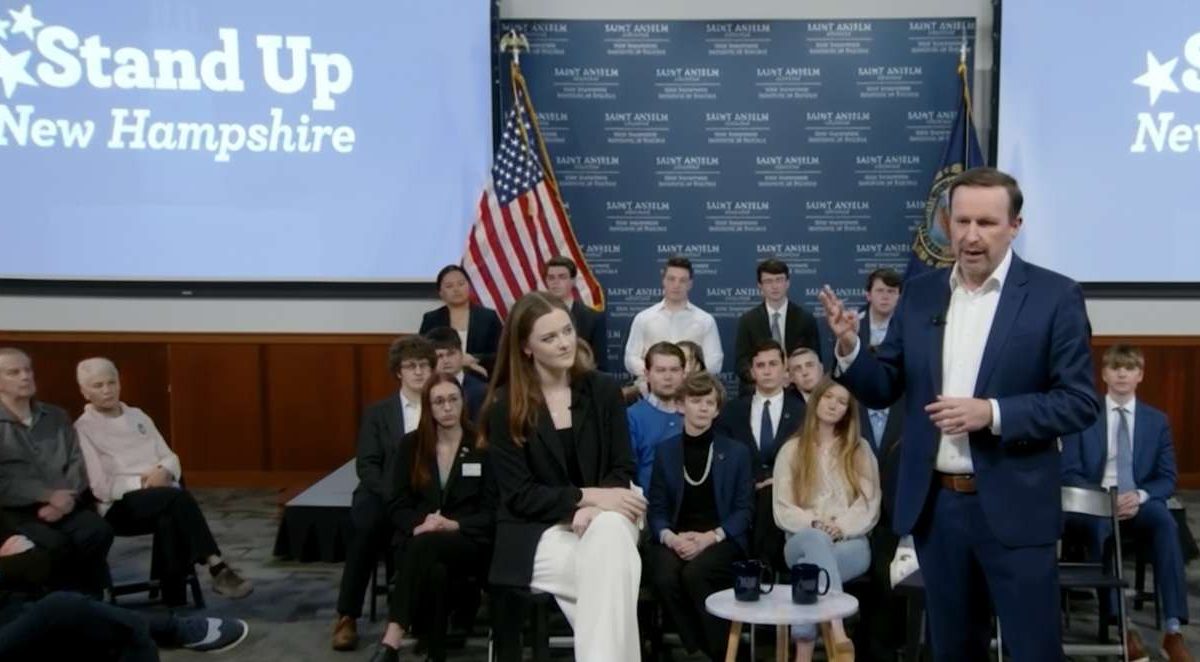
Chris Murphy urges firmer hand from Schumer as Democrats grapple with divisions
Sen. Chris Murphy of Connecticut recently signaled concern about Senate Democratic leadership, calling for clearer, more forceful management of intra-party disputes and urging Democrats to judge policies on their merits rather than reject ideas solely because they were once backed by former President Trump.
- Sen. Murphy raised concerns about how Senate Democratic disputes are handled, based on national reporting linked to the AOL report.
- Measured critique of Schumer: Murphy stopped short of calling for a leadership change but urged a firmer approach to preserve unity and advance legislation (the cited report).
- Policy pragmatism: He suggested evaluating policies on their merits — even if they were once supported by President Trump — and considering bipartisan cooperation where appropriate (reported article).
The exchange and what Murphy said
In a brief reported exchange, Sen. Chris Murphy was asked about the future of Senate Majority Leader Chuck Schumer. Murphy did not explicitly call for Schumer to resign or be replaced; instead, he began a thought saying,
“I think Chuck has a super…
and the remark ended without a direct verdict on Schumer’s overall performance, according to the report.
Tone and emphasis: Murphy’s comments were described as measured but pointed. He urged clearer and more forceful leadership to resolve divisions and broker consensus within the caucus, emphasizing the need for leadership that can present a coherent agenda to the public and voters (the cited report).
On policy and bipartisan review
A notable element of Murphy’s comments centers on policy judgment. He urged Democrats not to reflexively reject policies solely because they once had support from a Republican president, advocating instead for a pragmatic, merit-based review and openness to bipartisan solutions when those serve the public interest (reported article).
The reporting did not specify particular Trump-era policies Murphy referenced; it framed his remarks as a broader call for evaluating ideas by substance rather than origin, a stance likely to appeal to voters favoring problem-solving over partisan reflex.
What this says about Senate Democrats’ divisions
Murphy’s remarks underscore persistent divisions on issues such as spending, social policy, and Republican initiatives. When a senior senator publicly signals dissatisfaction with internal dispute resolution, it signals that such tensions could impede legislative priorities and complicate messaging. Democratic leaders, the report suggests, may need to be more active in managing factional differences before they become public and politically damaging (the cited report).
Democratic leadership concerns voiced by Murphy focus on practical direction rather than personal attacks: the call is for decisive management and clearer top-down coordination to preserve unity.
Reporting context and verification
The account of Murphy’s comments is drawn from reporting that summarized his interview remarks; coverage appears limited and has not yet been widely corroborated by a broad set of independent sources. Details here rely primarily on the cited article, and readers should note the constrained scope of available reporting and the absence of extensive direct quotations beyond the partial remark.
Implications for Hesperia, California
Economic impact
Local voters in Hesperia watch federal leadership for effects on jobs, permitting and infrastructure decisions that reach the High Desert. If Senate Democrats remain divided and unable to pass funding or infrastructure bills, federal project delays could affect San Bernardino County and Hesperia directly. Murphy’s call for bipartisan cooperation could, if realized, smooth approval for local infrastructure, transportation and public-safety funding.
Political consequences
In conservative-leaning Hesperia, visible national disarray may be seized upon by local opponents to argue that Democrats are disorganized and ineffective. Conversely, Murphy’s pragmatic stance on bipartisanship can be framed locally as a willingness to prioritize problem-solving over partisan purity.
Social and cultural effects
Fractures in national Democratic messaging can deepen local polarization and create uncertainty for civic groups seeking federal support. Alternatively, openness to bipartisan ideas could create opportunities for NGOs and service providers to advance practical proposals regardless of partisan origin, aligning with Hesperia’s local values of strong leadership and clear accountability.
Practical applications for residents
- Advocacy: Local officials can press for specific federal funding and frame proposals to appeal to bipartisan sensibilities if leaders signal openness to cross‑aisle solutions.
- Voter messaging: Campaigns may highlight Democratic leadership concerns to argue for candidates who promise decisive governance and accountability.
- Civic engagement: Residents can contact their representatives to urge attention to region-specific priorities, particularly when internal Senate disputes threaten timely funding or approvals.
Source links
Primary reporting on the exchange and Murphy’s remarks: Primary reporting on the exchange and Murphy’s remarks
Reporting note
This article relies on available reporting of Sen. Chris Murphy’s comments and the summary of his interview as reflected in the cited coverage. The reporting indicates Murphy’s concerns about leadership and intra‑party disputes but does not show an outright call for Schumer to step down; details remain limited and are based on the linked source (the source article).


