
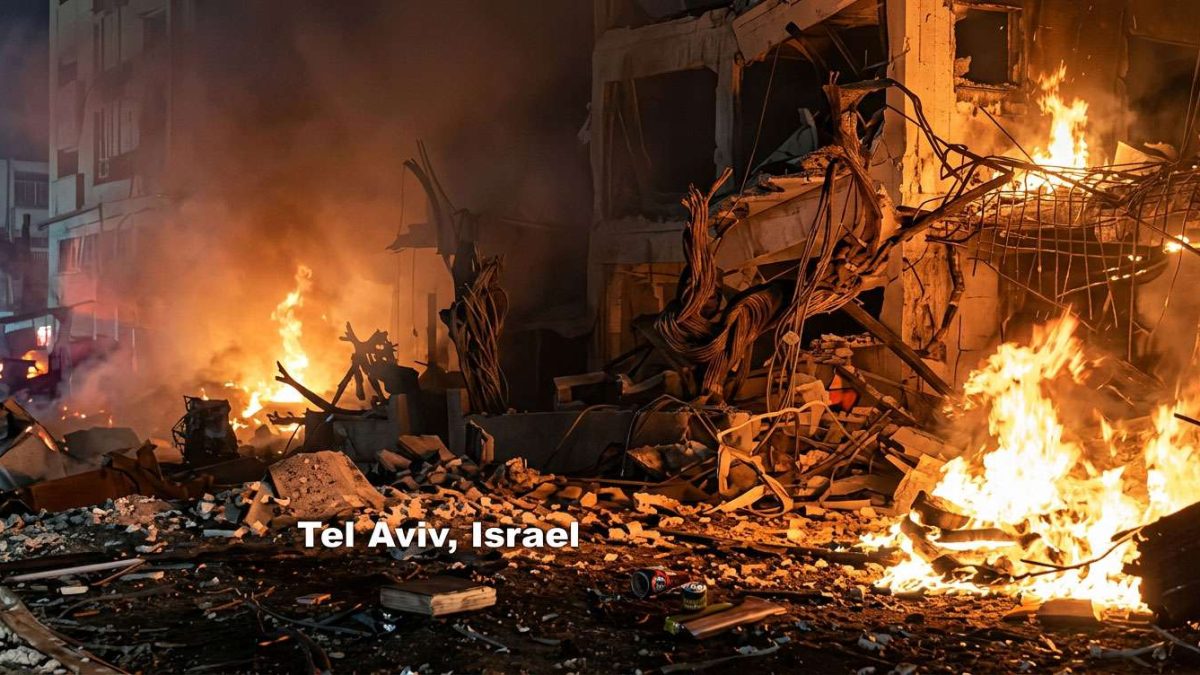
Hezbollah and Iran carry out synchronized barrage using cluster munitions, raising stakes in widening Israel-Hezbollah conflict
Hezbollah and Iran have launched synchronized attacks against Israel since March 2, 2026, using rockets, missiles, drones and cluster munitions, escalating strikes amid the joint U.S.-Israeli Operations Epic Fury and Roaring Lion in week two.
Key takeaways
- Coordinated waves: Analysts report Hezbollah and Iranian launches often overlap in timing, suggesting coordinated strike waves.
- Cluster munitions used: Israel has confirmed Iranian use of cluster warheads, which complicate air defenses and are banned by many states.
- IDF counterstrikes: Israel has mounted heavy airstrikes across Lebanon, striking hundreds of targets while urging civilian evacuations.
- Local impacts: Ripple effects are expected in places like Hesperia, California, across economic, political and social lines.
Main report
Overview. Since March 2, 2026, open-source monitoring groups and analysts say Hezbollah and Iran have escalated a coordinated campaign of rockets, missiles, drones and other munitions targeting northern and central Israel. This pattern marks a significant intensification of the conflict in its second week.
Coordinated strikes and timeline
Hezbollah’s entry accelerated after U.S.-Israeli strikes on Iran. Monitoring groups reported 192 attack waves by March 8 and 269 by March 10, encompassing rockets, missiles, drones, anti-tank fire and other devices. On several days, including March 9, multiple waves struck in quick succession.
National security expert Kobi Michael said Hezbollah’s launch waves frequently coincide with Iranian missile launches. He told reporters near Tel Aviv:
“Most of Hezbollah’s rockets and drones are launched simultaneously with the Iranian missiles.”
Michael framed the pattern as resembling a deliberate, coordinated strike strategy. The quote and analysis were reported by Fox News.
The Israel Defense Forces (IDF) has acknowledged heavy missile and drone fire from Lebanon and Iran but an IDF spokesman told analysts there was “no concrete intelligence indicating coordination/synchronization,” arguing timing overlaps do not necessarily prove synchronized planning. This contrast highlights differing interpretations between analysts and Israeli officials, noted in an FDD analysis.
Cluster munitions and Israel’s air defenses
Key change: Israeli officials have publicly confirmed Iranian use of cluster munitions — warheads that burst at altitude and disperse bomblets across wide areas. These bomblets can appear as orange fireballs at night and are difficult for interceptors to track and neutralize before they fall, straining layered air defenses.
An anonymous Israeli official and media reporting suggested roughly half of incoming Iranian projectiles in recent barrages were cluster types, increasing the challenge for interceptors. Coverage and commentary on this development are available via Fox News and background on international prohibition efforts through the Convention on Cluster Munitions, which more than 120 nations have joined.
Hezbollah tactics on the ground
Sources tracking Hezbollah activity report a return to guerrilla-style operations: small, dispersed cells in south Lebanon, minimized electronic comms to reduce interception risk, and rationing of anti-tank weapons for a potentially protracted fight. Analysts note lessons drawn from the 2006 war and post-2024 ceasefire period, including use of elite Radwan units and dispersion to complicate Israeli targeting. Reporting and analysis referenced Fox News.
Michael suggested Israel could seek to push forces north to the Litani River to create a buffer — a move that would broaden ground operations and raise logistical and manpower demands for the IDF.
Israel’s response: airstrikes and strategic aims
From early March, the IDF has carried out hundreds of airstrikes across Lebanon and on Iran-linked sites. Defense analysts tallied more than 500 Hezbollah targets struck by March 6, including strikes in Dahiyeh, Beirut, aimed at command centers, weapons depots and financial nodes tied to Hezbollah. Analysts estimate dozens killed and hundreds wounded in Lebanon after these waves of strikes, as reported in an FDD analysis and regional tallies from ACLED.
Israeli officials state their aims are to degrade and disarm Hezbollah’s military capabilities while curbing Iran’s missile and drone capacities. Protecting Israeli population centers — especially in the north and around Haifa — remains a stated priority as sirens and shelter routines persist in cities including Tel Aviv. Coverage noted by Fox News.
Broader context: U.S. role and regional escalation
The strikes have unfolded amid joint U.S.-Israeli operations codenamed Epic Fury and Roaring Lion. U.S. political actions in Washington have supported a robust posture toward Iran; recent Senate decisions rejected limits on broader action, underscoring alignment with a more aggressive strategy. A related video briefing and public reporting provide context.
Analysts argue Hezbollah’s intervention may aim to divide Israeli forces and preserve Iranian capabilities; Hezbollah portrays its strikes as retaliation and solidarity with Tehran. The result is a widening front with fighting across Lebanon and central/northern Israel and recurring waves of attacks and counterstrikes.
Implications for Hesperia, California
Economic impact: Hesperia’s local economy could experience ripple effects from a broader regional war. Businesses tied to international shipping, energy markets, or global investments may face higher costs and short-term volatility.
Political consequences: Conservative voters prioritizing strong national defense may press for continued U.S. support for Israel and tougher measures on Iran; local officials may receive constituent calls for robust military aid and clearer strategy from Washington.
Social effects: Veterans, military families and community groups with ties to Israel may organize solidarity events or relief drives. Emergency-preparedness groups can remind residents to review contingency plans for supply or energy disruptions.
Practical advice: Residents should review emergency plans, check insurance and fuel contracts, and consider contingency steps for small businesses. Voters concerned about defense and foreign policy are encouraged to contact representatives to express views on U.S. support and deterrence measures.
Sourcing and verification
This report draws on open-source monitoring and recent interviews. Major references include reporting and expert commentary from Fox News, daily situation reports from Israel-Alma (March 8) and Israel-Alma (March 10), analysis of IDF strikes from the Foundation for Defense of Democracies, and regional tallies from ACLED. Some operational claims about full coordination remain unverified by official military spokespeople; analysts and officials differ in their interpretation of simultaneous attacks.
Sources and further reading
- Fox News report — on-the-ground quotes and analysis
- Israel-Alma daily situation report (March 8, 2026)
- Israel-Alma daily situation report (March 10, 2026)
- FDD analysis of IDF strikes and Hezbollah activity
- ACLED regional update
- Convention on Cluster Munitions — background
- Video briefing and U.S. legislative context
Reporting based on information available through March 10–11, 2026; some operational claims remain unverified by official military sources.


