
Indiana Senate Rejects Redistricting Map, Delivering Major Trump Gerrymandering Setback as Indiana GOP Divisions Surface
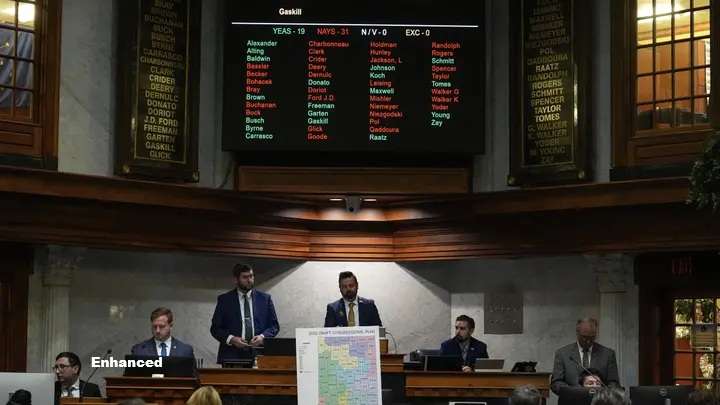
Indiana’s Republican-controlled State Senate voted 31-19 on Dec. 11, 2025, to reject a congressional redistricting plan backed by former President Trump, preserving current 2026 boundaries and exposing sharp intra-GOP divisions amid legal and public scrutiny.
- Vote: 31-19 in the State Senate; 21 Republicans crossed party lines to join all 10 Democrats in opposing the plan. Sources: IndyStar, AP.
- Impact: The rejected map would have increased GOP-projected U.S. House seats from 7 to 9 by reshaping two districts, according to independent analyses. Sources: Princeton Gerrymandering Project, The Washington Post.
- Next steps: The legislature adjourns Dec. 15; courts are likely to impose new maps by Feb. 2026 if lawmakers do not reach agreement. Sources: Politico, Ballotpedia.
What happened and why it mattered
Senators voted down a proposed Indiana congressional map intended to strengthen Republican chances in two competitive districts. The special session was convened after a federal judge ordered maps redrawn earlier in 2025. While the Indiana House had approved the proposal, the State Senate — where moderate and rural Republicans resisted — proved decisive.
The 31 votes against included Senate President Pro Tem Rodric Bray and 20 other Republicans who cited legal risk and public backlash. Supporters, including Gov. Mike Braun and former President Donald Trump, argued the plan reflected population shifts and protected Republican seats. Trump publicly urged passage and later criticized defectors on social media, calling the vote a betrayal. Sources: IndyStar, Politico, The Washington Post.
How the map would have shifted power
Analysts said the rejected plan would have turned two toss-up or slight-Democrat-leaning districts into clearer GOP advantages, moving Cook-style partisan leans by several points. Independent simulations and the Princeton analysis showed the proposal could have shifted Districts 5 and 7 toward Republican margins.
Projected effect: If adopted, projections indicated Indiana’s U.S. House delegation could have risen from seven Republicans and two Democrats to nine Republicans and zero Democrats, altering national House math. Sources: AP, Princeton Gerrymandering Project, FiveThirtyEight.
Trump’s role and intra-party backlash
Former President Trump personally lobbied lawmakers, posting on Truth Social and making calls to pressure votes. He praised the plan as a “total WIN for Indiana Republicans” and later warned of primary challenges against the 21 GOP senators who opposed it. National Republican groups criticized the defections as “self-sabotage.”
“A total WIN for Indiana Republicans” — former President Donald Trump on the redistricting proposal; he later threatened primary challenges to dissenting senators.
Defecting Republicans countered that the legal exposure and voter backlash outweighed short-term gains. They cited polling showing majority opposition and warned that aggressive gerrymandering could erode public trust and invite state and federal court reversals. Sources: The Washington Post, CNN, IndyStar.
Legal backdrop and timing
A U.S. District judge earlier in 2025 found Indiana’s current maps violated state constitutional requirements and ordered a redraw. The special session was the legislature’s attempt to comply; with the Senate’s rejection, courts are likely to impose a remedy if lawmakers fail to act by judicial deadlines. Legal observers expect judges to move quickly to prevent map uncertainty ahead of the 2026 midterms. Sources: AP, Politico.
Reactions from across the spectrum
- Trump and allied national Republicans: Outraged; promised primaries and blamed internal disloyalty. Source: The Washington Post.
- Indiana moderates and defecting GOP senators: Cited legal risk, public opposition, and long-term costs of perceived overreach. Sources: IndyStar, Politico.
- Democrats and good-government groups: Celebrated the rejection as a win for fair maps; Common Cause Indiana criticized the plan as still overly partisan. Sources: AP, Common Cause Indiana.
- Neutral analysts: Warned the decision increases Democratic chances in at least one Indiana seat and could affect national House control math. Source: FiveThirtyEight.
Local political effects inside Indiana
Practically, the 2026 midterms will proceed under existing congressional boundaries, preserving a 7-2 Republican advantage. Politically, the fallout may include primary fights instigated by Trump-aligned actors and pressure on state and local GOP organizations to purge or discipline moderates who opposed the map. National strategists framed the proposal as defensive gerrymandering against population shifts; opponents called it short-sighted and legally risky. Sources: Politico, The Washington Post.
Implications for Hesperia, California
Economic impact:
- Federal representation: Hesperia’s direct representation is unaffected, but changes in House control could shift federal priorities affecting infrastructure grants, public land policy, and veterans’ funding — areas important to Victor Valley local governments and nonprofits.
- Campaign dollars: Indiana’s battle will draw national donors; shifting national dynamics can alter fundraising flows that indirectly affect California races and local GOP fundraising in Hesperia.
Political consequences:
- Local Republicans may see the episode as a cautionary tale about hardline gerrymandering vs. legal risk, while pro-Trump activists may press for ideologically pure candidates.
- Trump’s vow to target dissenting Republicans signals a higher risk of contested primaries for county and state hopefuls in and near Hesperia.
Social and cultural effects:
- Voter engagement: The national headline can mobilize both conservative and moderate voters in Hesperia, potentially boosting turnout.
- Civic trust: For residents who prioritize process and rule of law, the Senate’s rejection may reassure; for those who prioritize immediate partisan gains, it may deepen frustration with party leaders.
Practical applications for residents
What Hesperia residents should watch: federal committee control and funding priorities that hinge on House majority; shifts in national campaign spending that could affect local outreach and advertising.
Local GOP strategy: county and city Republican organizations should reassess endorsements and vetting procedures ahead of 2026 primaries, anticipating sharper intraparty contests driven by national loyalty tests.
Sources for further reading
- Indianapolis Star (IndyStar, Dec. 11, 2025)
- Associated Press (AP, Dec. 11, 2025)
- The Washington Post (Dec. 11, 2025)
- Politico (Dec. 11, 2025)
- CNN (Dec. 11, 2025)
- FiveThirtyEight
- Ballotpedia
- Common Cause Indiana
- Dave’s Redistricting App
- Indiana Secretary of State
Reporting for Times Media Service from Indianapolis — with local perspective and implications for Hesperia, California.


