
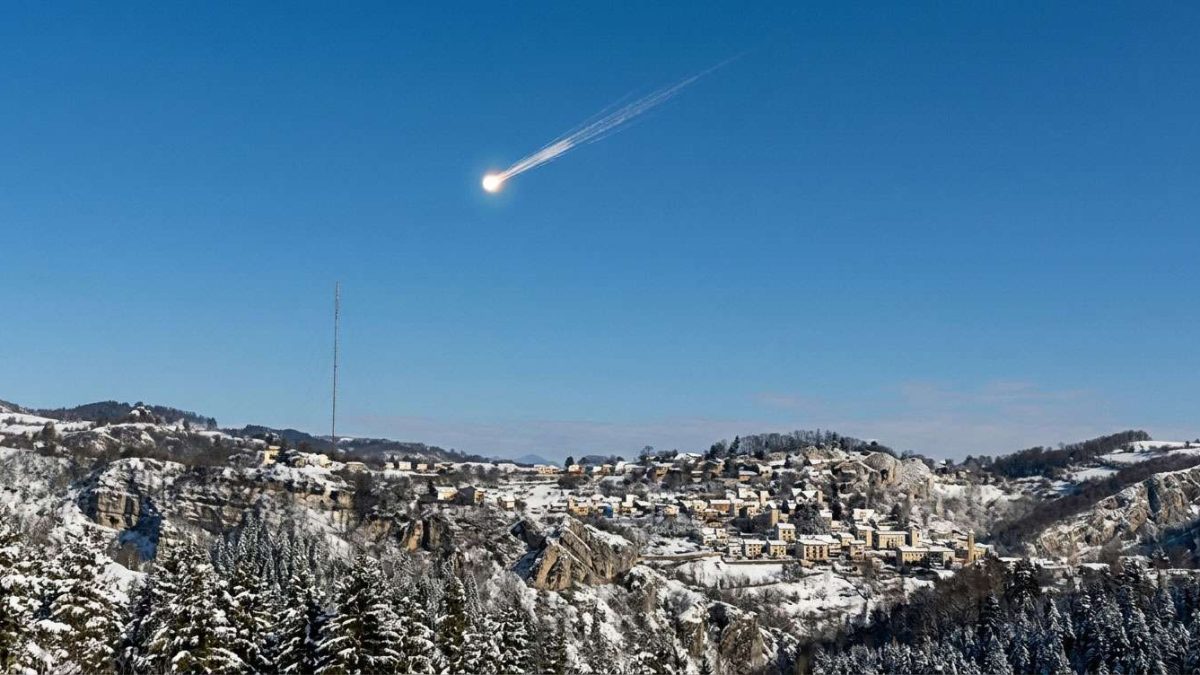
Valley City Meteor Lights Up Cleveland Sky; Fragments Produce Loud Booms Across Ohio and Region
Cleveland, Ohio (Our Hesperia) –Just before 9 a.m. ET on March 17, 2026, a roughly 6-foot, 7‑ton meteor became a bright daytime fireball over Lake Erie, fragmented above Valley City, Ohio, and sent a pressure wave that produced loud booms across the region.
- Fireball and fragmentation: A ~6‑foot, ~7‑ton object traveled >34 miles through the upper atmosphere and broke up ~30 miles above Valley City, releasing energy ≈ 250 tons of TNT. (NASA; WTOP)
- Wide visibility: The bright daytime streak was reported across at least 10 states and Washington, D.C., and seen as far as Ontario; video was captured by the National Weather Service (Pittsburgh/Cleveland) and local outlets.
- No immediate damage: The pressure wave caused explosive-sounding booms and shaking but authorities reported no injuries or confirmed structural damage. (Signal Cleveland)
What happened
A bright daytime fireball — described by experts as a visible, daylight “fireball” — passed over Lake Erie and moved southeast before breaking apart over Valley City, Ohio. NASA and local agencies estimate the object was about six feet across and weighed roughly seven tons. (NASA; WTOP)
Time and path
Eyewitnesses first saw the streak just before 9 a.m. ET. The meteor traveled southeast at about 40,000–45,000 mph for more than 34 miles through the upper atmosphere, then fragmented roughly 30 miles above Valley City. (National Today)
Visibility and recordings
The event was reported across at least 10 states plus Washington, D.C. and seen in Ontario, Canada. Video of the bright arc was shared by staff at the National Weather Service office in Pittsburgh and widely circulated on social media. (WTOP / NWS)
Impact, energy and the sonic boom
NASA calculated the breakup released energy roughly equal to 250 tons of TNT. That energy produced a pressure wave that reached the ground and caused the loud booms and shaking reported across Northeast Ohio and neighboring states. Whether a sonic boom reaches the surface depends on an object’s size, speed and breakup altitude — in this case the combination produced both bright daylight visibility and audible booms. (National Today)
NASA’s scientific account
Bill Cooke, head of NASA’s Meteoroid Environments Office, said the object was “too small to be tracked before it hit Earth’s atmosphere” and likely came from the asteroid belt between Mars and Jupiter. Cooke and his team estimate the meteor traveled more than 34 miles through the atmosphere before fragmenting about 30 miles above Valley City. Fragments continued south and may have produced meteorites near Medina County, though none were immediately recovered. (NASA; WTOP)
“The object was too small to be tracked before it hit Earth’s atmosphere,” — Bill Cooke, NASA Meteoroid Environments Office.
Expert context
Carl Hergenrother of the American Meteor Society called the object a “fireball”, a term for meteors bright enough to be easily seen in daylight. Daytime fireballs of this brightness are rare; growing numbers of video recordings help researchers model atmospheric entry and fragmentation more precisely. (Los Angeles Times)
Eyewitness reports and local response
Local dispatch centers received numerous calls about the loud booms; most calls were informational. Lorain County emergency managers reported busy phone lines but no immediate issues. Residents across Cleveland and nearby counties described a bright streak and earth-shaking sound on social media and to newsrooms. (Signal Cleveland)
Scientific context on meteorites and surface reach
Most small meteors break up in the atmosphere; experts estimate less than 5% of original mass typically reaches the surface. Surviving fragments are usually small and scattered. NASA continues to analyze sensor data and eyewitness accounts to refine the meteor’s composition and fragmentation pattern. Such events are valuable tests for atmospheric entry models. (NASA; WTOP; National Today)
Why this matters to local communities
A bright daytime fireball with an audible boom can alarm residents. Officials advise calm, practical checks: look for injuries, scan for falling debris nearby, and report credible findings. In this event, no injuries or confirmed damage were reported; agencies emphasized readiness and accurate public messaging. Modern networks of cameras, weather services and citizen reporting help scientists reconstruct events quickly. (Signal Cleveland; WTOP)
Implications for Hesperia, California
Economic: The Valley City meteor is unlikely to directly affect Hesperia, but the event underscores the need for timely, verified information for airports, logistics firms and event planners.
Political: For communities valuing efficient government, this episode highlights the importance of well-trained emergency managers, clear public messaging, and maintained alert systems.
Social/Cultural: Unexpected booms and bright meteors can be startling; local leaders, schools and faith groups can turn curiosity into STEM engagement and community cohesion.
Practical applications and preparedness
Hesperia residents and similar communities should maintain routine preparedness: know evacuation routes, keep emergency kits, sign up for county alerts, and rely on verified official channels. Astronomy clubs and community colleges can leverage such events for education and outreach.
Summary
The Valley City event reinforces that small space rocks enter Earth’s atmosphere with little warning. Collaboration among emergency services, scientists and citizens turns an alarming moment into information and learning. Key takeaways: stay prepared, trust official sources, and use these events for local education and resilience.


