
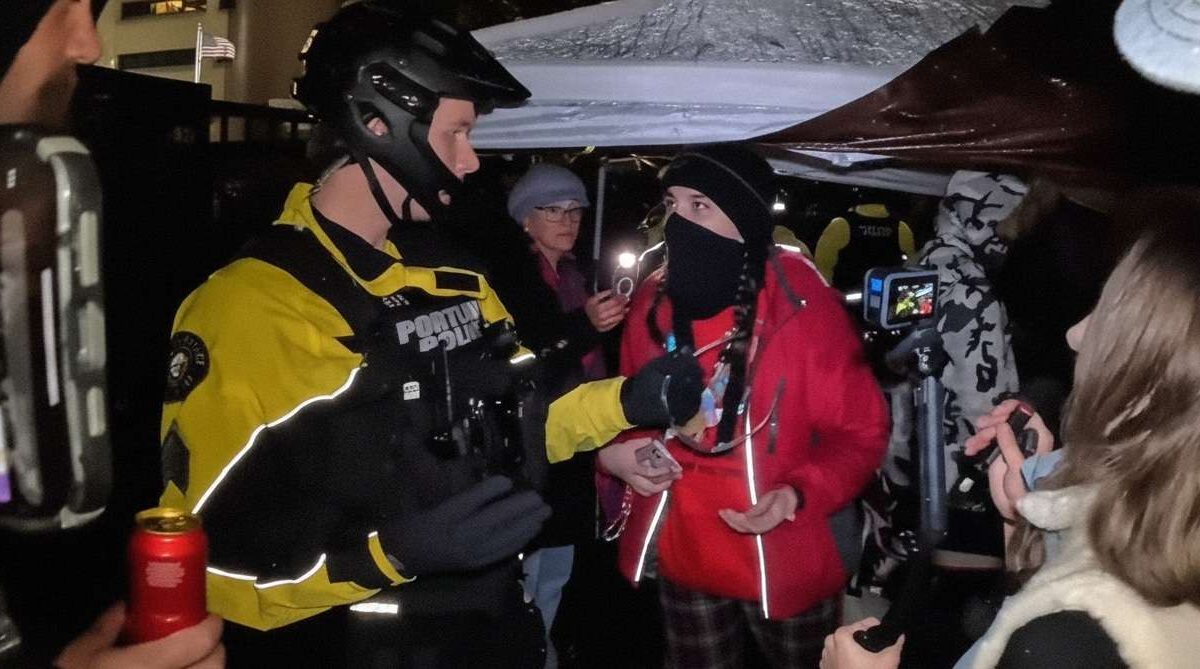
Portland orders ICE protest encampment cleared as police warn of stepped-up enforcement
Portland police cleared a months-long ICE protest encampment outside the federal facility, removing tents and equipment late at night; officers warned they will step up enforcement of public-right-of-way rules and signaled stricter enforcement ahead in coming days.
- Encampment removed: Officers dismantled tents and belongings after late-night sweeps — Video.
- Months-long occupation: The protest site had lined sidewalks for roughly four to five months with dozens of tents — Video.
- Enforcement shift: Police warned of stepped-up action on public drinking, disorderly conduct, jaywalking and blocking traffic — see Video and a short clip.
- Clashes and legal context: Recent confrontations included arrests and pepper spray, and the site is complicated by a zoning dispute — reporting: Fox News, OPB.
Police action and the enforcement shift
Portland police say the sweeps were intended to restore the public right-of-way and reduce safety hazards created when tents and shelters blocked sidewalks near the ICE facility. Officers conducted late-night removals after advising protesters that occupying the sidewalk would no longer be permitted.
Onsite statements and footage show officers announcing a change from passive monitoring to active enforcement. Police specifically named conduct they intend to crack down on: public drinking, disorderly conduct, jaywalking and blocking pedestrian or vehicle traffic. Blocking traffic, officials noted, can prompt arrests for second-degree disorderly conduct under local law. See the Video and a short clip.
“We will enforce existing laws more strictly in the coming days to ensure sidewalks and streets remain open and safe for the public,” police told reporters on site.
Encampment background and protest activity
The encampment grew from ongoing opposition to federal immigration enforcement. Activists maintained a continuous presence, staging regular marches, rallies and demonstrations that drew local and national attention. Over roughly four to five months, dozens of tents lined the sidewalk across from the federal building — documented in Video and local reporting (OPB).
Organizers framed the encampment as protest against ICE policies; opponents argued the long-term occupation impeded access and threatened public safety. The site became a flashpoint for clashes involving protesters, pro-ICE supporters and law enforcement — a dynamic amplified by national debate over immigration enforcement and recruitment (Analysis).
Clashes, arrests and policing tactics
Tensions have occasionally escalated into direct confrontations. In recent clashes, officers arrested at least two people and used pepper spray during a standoff when a protester crossed a restricted line. Local reporting captured moments of physical confrontation and the subsequent arrests (Reporting).
Protesters have alleged the use of undercover informants and plainclothes officers to monitor activity; police say such tactics are necessary to identify those committing criminal acts and to keep the area safe. Onsite monitoring footage is available (Onsite reporting).
Legal dispute over facility use
A separate legal fight involves the building owner and the city over zoning and the facility’s use for overnight detention. City officials question whether the site’s operations comply with local zoning; the owner is contesting the city’s authority. That litigation could shape how federal and local authorities manage the property and respond to protests (OPB).
Overlapping jurisdictional questions complicate enforcement strategy and could affect which agencies — city, county, state or federal — take the lead at the site.
Community reaction and public-safety concerns
Neighbors, businesses and residents expressed mixed reactions. Some said the encampment made sidewalks unsafe and reduced foot traffic; others warned that increased policing risks escalating tensions and criminalizing protest. The shift from tolerant monitoring to active enforcement reflects rising frustration among residents and officials over sustained disruption.
Police say they will maintain an increased presence to prevent criminal conduct and protect the right-of-way, and that arrests may increase if people continue to block sidewalks or roadways — as shown in Video.
Implications for Hesperia, California
Economic impact: Hesperia businesses could face indirect costs if similar encampments occur locally — cleanup, lost customers and obstructed sidewalks. City leaders may review ordinances to allow quicker removal procedures; see on-site coverage (Video).
Political consequences: Conservative audiences may view Portland’s shift as validation of stronger law-and-order measures; local officials could cite Portland when arguing for clearer rules on public right-of-way and faster remedies for property owners (Reporting).
Social and cultural effects: The situation highlights polarization over persistent encampments. Leaders in Hesperia should prepare for divergent community views, plan for crowd control and emphasize de-escalation training to avoid confrontations similar to Portland’s (Onsite reporting).
Practical applications: Review local codes on camping, obstruction and disorderly conduct; coordinate police, city attorneys and property owners; and train officers to manage encampments while respecting civil liberties (OPB; Video).
Sources and reporting
- Video and on-scene reporting from Portland police actions
- Short video reporting
- Onsite reporting about protest monitoring
- Reporting on arrests and clashes (Fox News)
- Coverage of legal dispute over facility use (OPB)
- Analysis of national controversy around ICE actions and recruitment
Bottom line: Portland police will maintain an increased presence around the ICE facility and enforce laws more strictly in coming days to keep sidewalks and streets open and safe — documented in video coverage.


