
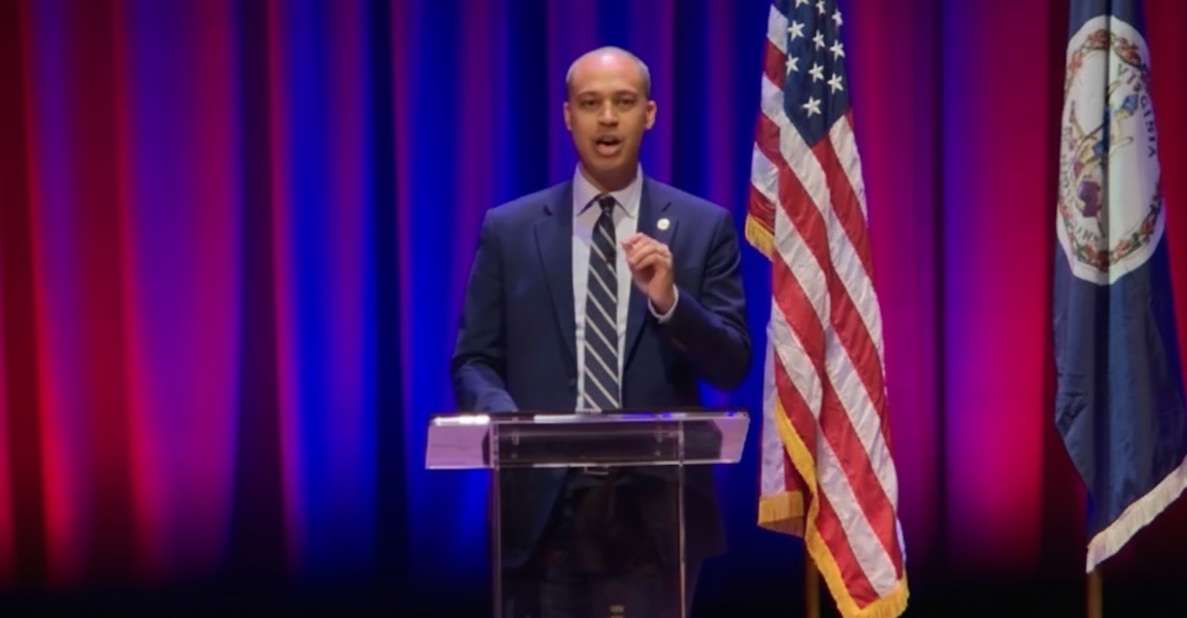
Jay Jones Faces Scrutiny Over Reckless Driving Conviction and Court-Ordered Service
Jay Jones, Democratic candidate for Virginia attorney general, acknowledged a reckless driving conviction after being stopped driving 116 mph and says he completed court-ordered service totaling 1,000 hours, including 500 hours reported at a political action committee he founded.
- Reckless driving: Jones was stopped at 116 mph in New Kent County and convicted.
- Community service questions: Court filings list 1,000 hours — 500 at the NAACP and 500 at Meet Our Moment, a PAC Jones founded.
- Legal review: New Kent County Commonwealth Attorney Scott Renick signaled a review of whether PAC work qualifies as court-ordered service.
- Political fallout: The debate exchange sparked calls from some officials, including Gov. Glenn Youngkin, for Jones to withdraw.
Debate grilling: what happened on stage
Thursday night’s debate featured sustained questioning from Republican nominee Jason Miyares about Jones’s driving record and the paperwork documenting his community service. Miyares pressed for specifics on the reported speed and the organizations where hours were performed. Coverage of the debate and related reporting are available from CBS News.
“I’ve taken accountability for my mistakes,”
Jones reiterated at the debate that he accepted responsibility and completed what the court required, a statement reported by AOL.
Details of the reckless driving conviction
Public reports indicate a state trooper stopped Jones driving 116 mph in New Kent County, triggering a reckless driving charge and subsequent conviction. Jones has characterized the incident as a mistake and says he has been accountable since. Reporting with further detail is available via CBS News.
Political analysts noted the episode’s campaign impact. Larry Sabato called it a self-inflicted wound, saying Jones knew the reckless driving conviction was on his record before deciding to run, per debate coverage and commentary.
Questions about Jay Jones’ community service and the PAC
Court paperwork submitted by Jones lists 1,000 hours of community service: 500 at the NAACP and 500 at Meet Our Moment, the political action committee Jones founded and runs. Video of the filings and statements about the matter were posted online; see the debate and statements video for primary footage.
New Kent County Commonwealth Attorney Scott Renick questioned whether work for a political group — particularly one run by the defendant — satisfies a court’s intent that community service “gives back to the community.” Renick said the county would review whether the paperwork met the court-ordered requirement.
Campaign transparency: Jones’s campaign has not provided a detailed breakdown of tasks completed at Meet Our Moment or independent verification; critics say community service should be verifiable and nonpartisan, while supporters point to his NAACP work as evidence of public service.
Political reactions and calls for accountability
The exchange and paperwork prompted public reactions. Gov. Glenn Youngkin said Jones should withdraw from the race and called the situation “disgraceful,” reflecting calls by some Republicans for accountability. Most leading Democrats, however, did not publicly demand Jones exit the race, and his defenders emphasize his admission and broader record.
The role of media and public records
Video of the debate and the court filings have circulated on news broadcasts and social platforms, increasing national attention on the Virginia Attorney General race. Coverage from outlets such as CBS News and debate footage on YouTube drove much of the public conversation.
Other debate flashpoints: texts and temperament
Beyond the driving case, Miyares raised private text messages Jones sent, labeling them “incendiary” and using them to question temperament. Jones answered by stressing accountability and urging voters to consider his record and priorities.
Voters now weigh whether past conduct disqualifies a candidate or serves as a lesson in accountability — a central theme for an office that demands legal judgment and public trust.
Legal and ethical questions under review
Legal observers say the pivotal question is whether the community service satisfied the court’s terms and whether time spent at a PAC can legally count as court-ordered service. Commonwealth Attorney Renick indicated his office would examine the filings; if the county finds the service insufficient, further legal questions could follow.
Implications for Hesperia, California
- Trust in officials: Hesperia voters who prioritize law and order may view the episode as a test of political accountability and transparency.
- Campaign vetting: Local campaigns might tighten background checks after seeing how past conduct affects statewide races.
- Community service standards: Courts and nonprofits in Hesperia may review documentation and verification practices for court-ordered service.
- Political messaging: The episode could be used by both conservative and progressive activists to frame standards for candidates.
- Voter impact: Residents who prioritize personal responsibility may weigh such controversies heavily in local races.
Sources and reporting notes
This report draws on coverage and materials including:
- CBS News — Virginia attorney general debate coverage, stop and conviction reporting.
- AOL — Jones’s debate admission: “I’ve taken accountability for my mistakes.”
- YouTube — Debate and statements video, including Commonwealth Attorney Scott Renick remarks and paperwork footage.
Reporting team notes: Times Media Service staff reviewed court filings and debate footage. Jones’s campaign has acknowledged the conviction and said he completed required service; the campaign has not provided detailed descriptions of work done at Meet Our Moment beyond paperwork filed with the court.


