
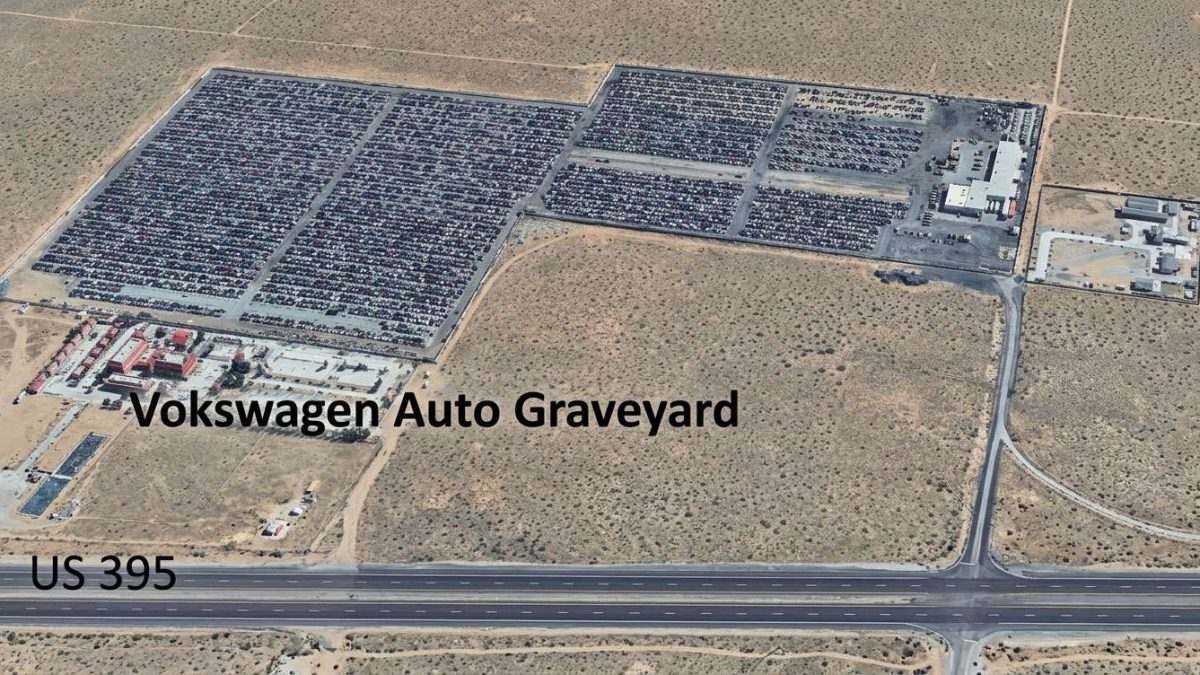
Sea of Silent Cars: How Dieselgate Left Tens of Thousands of Volkswagens and Audis Mothballed in the Mojave
Adelanto, California — Tens of thousands of Volkswagen and Audi diesel vehicles were removed from circulation and parked in Mojave Desert lots after the 2015 Dieselgate scandal, part of a large buyback, repair and settlement program.
Key takeaways
- Dieselgate exposed: the Volkswagen emissions scandal began in September 2015 when the EPA found illegal “defeat devices” in VW diesel cars.
- Scale and cost: about 482,000 U.S. vehicles (model years 2009–2015) were affected and Volkswagen agreed to up to $14.7 billion to resolve U.S. claims, including consumer buybacks and repairs (U.S. Department of Justice settlement).
- The Mojave lots: vast outdoor storage fields near Victorville and Adelanto became the most visible symbol of the physical fallout as cars awaited repair, resale or scrappage.
The scandal in brief
What happened: regulators discovered that certain VW diesel models contained software that activated emissions controls only during testing, allowing on-road emissions of nitrogen oxides as much as 40 times legal limits. The exposure triggered legal actions, technical remedies and a sweeping consumer remediation program.
Scale, remediation and settlements
Court records and federal filings documented the numerical scope: roughly 482,000 diesel vehicles in the U.S. (model years 2009–2015) were affected. Volkswagen agreed to a package worth up to $14.7 billion, including about $10.03 billion for consumer buybacks, lease terminations and approved fixes (U.S. Department of Justice settlement).
The scandal and the storage problem
When regulators ordered remedies, Volkswagen was required to offer owners buybacks or approved repairs. That obligation meant hundreds of thousands of cars were removed from the road quickly, creating an immediate logistical challenge: where to keep them while they were processed?
The Mojave lots: a striking image of corporate fallout
Aerial photos and news accounts from the period show expansive fields of parked Volkswagens and Audis in San Bernardino County’s desert near Victorville and Adelanto. From above, the rows resembled metallic waves stretching to the horizon — an enduring visual record of the buyback program and its material footprint.
“Local photos and independent reporting documented large outdoor storage lots in the Victorville/Mojave area; official federal filings summarize the buyback program but do not list every storage location.” — Reporting note
Why the desert?
The Mojave’s dry air and low humidity reduced corrosion, helping preserve vehicles that might later be repaired and resold after regulatory approval. The choice was practical: inexpensive, secure land where cars could be stored with lower risk of rust and deterioration.
Operational and financial realities
Parked cars are not cost-free. Volkswagen and its contractors had to staff lots, manage batteries, start engines periodically, provide security and coordinate transport — all costs layered onto the broader financial remedies imposed by regulators and courts (U.S. Department of Justice settlement).
Where the cars ended up
Over time, most collected vehicles were either repaired under approved fixes and returned to the market or scrapped if they were too old or damaged. The DOJ settlement allocated funds for consumer remedies and emissions mitigation, and the resulting movements affected dealerships, salvage operations and secondary markets.
Local response and oversight
County and city officials tracked large storage operations for land-use, safety and environmental concerns. The presence of the lots created a temporary local economy: security firms, mechanics and transport companies found steady work handling the idle fleet.
Political and institutional implications
Regulators and courts enforced remedies intended to protect public health and hold a multinational corporation accountable. For voters who emphasize rule of law and market accountability, Dieselgate stands as an example of legal systems imposing significant penalties and corrective measures for deliberate corporate misconduct.
What reporting does and does not confirm
The core facts — the existence of defeat devices, the number of affected vehicles, and the monetary settlement — are documented in regulatory filings and the Volkswagen emissions scandal overview and DOJ settlement. Independent reporting and public imagery from the period document large storage lots in the Victorville/Mojave area, though official filings do not list every storage site in exhaustive detail.
Implications for Hesperia and local residents
Economic: short-term local jobs and demand for storage land provided income and business opportunities for area residents and landowners.
Political and social: officials handled oversight and residents raised concerns about safety, traffic and long-term land use. The lots became a visible reminder that global corporate decisions can have immediate local consequences.
Practical guidance for residents
- Watch for redevelopments: storage land may be repurposed; monitor county planning notices for new projects.
- Buy wisely: many fixed vehicles re-entered the used market; ask sellers for documented repair history and certificates of compliance when considering affected-era VWs and Audis.
Sources and further reading
Primary sources informing this report include federal filings and public summaries. For additional background:
- Volkswagen emissions scandal — overview
- U.S. Department of Justice — Volkswagen settlement and expenditures
Reporting note: DOJ settlement documents and public summaries provide the core facts about the VW diesel defeat devices, the scale of affected vehicles, and the $14.7 billion settlement. Independent reporting and public imagery documented large outdoor storage lots in the Victorville/Mojave area; official federal filings summarize the buyback program but do not list every storage location.


